


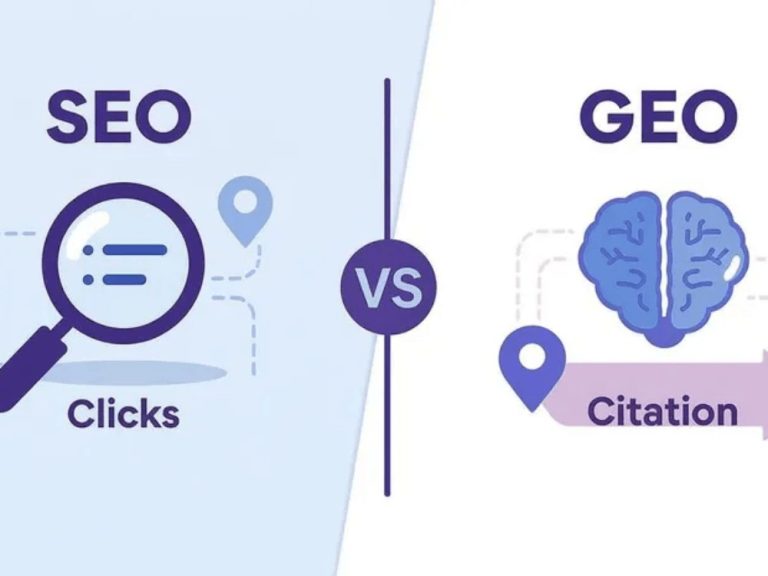
What is Generative Engine Optimization (GEO)? A Simple User Guide
Generative Engine Optimization involves crafting content so that it is cited by AI tools such as ChatGPT, Google AI Overviews, and Perplexity. Although it may sound technical, it is simply the newer sibling of SEO. Rather than aiming to secure blue links on a results page, you now need to get your content mentioned in an AI-generated answer. This change affects nearly every aspect of how content is written, organised, and evaluated. The following guide explains all of this in simple terms, including practical examples throughout.
Key Takeaways
- Generative Engine Optimization (GEO) ensures that your content is cited in the answers produced by AI, not merely ranked on a search page.
- Now AI systems such as ChatGPT, Gemini, Perplexity, and Google AI Overviews provide direct answers to questions, usually omitting traditional links.
- GEO places greater importance on clarity, structure, and reliable sourcing than on keyword density.
- The likelihood of your work being cited increases if the data is structured, clear headings are used, and factual accuracy is ensured.
- There is a great deal of overlap between GEO and SEO, but GEO includes an aspect that concerns machine readability and answer-worthiness.
- To assess the success of GEO we now need new metrics because the click-through rate on its own no longer tells the whole story.
What constitutes generative engine optimisation?
Generative Engine Optimization involves adjusting your content so that it is the one referred to by AI systems. AI systems have moved beyond simply crawling and ranking pages; they now read, summarize, and create entirely new answers from several sources at the same time. When someone asks ChatGPT a question, the model gathers information from different web pages and combines it into a single response. The goal of Generative Engine Optimization is to ensure your page is one of the sources the system selects, not one it leaves out.
Consider the way people search for information nowadays. A few years ago, you would enter a search query and then scroll through ten blue links. Nowadays, tools such as Perplexity or Google’s AI Overview just give you the answer instead. Scrolling is no longer necessary. As a result, your content has to win a place within that answer, and this calls for a completely different kind of optimization. That is why Generative Engine Optimization has been developed—because this new behaviour requires new strategies.
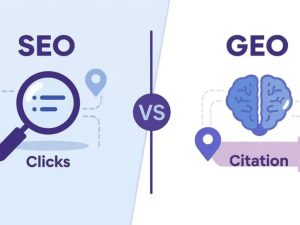
In contrast to traditional SEO, which places a strong emphasis on keywords and backlinks, GEO relies instead on clarity and trust. Since AI models prefer content that directly answers questions and references reliable facts, vague or superficial writing is usually ignored. On the other hand, well-organized and fact-heavy content is more likely to be included in the generated responses. That is essentially the main idea of Generative Engine Optimization.
Why Generative Engine Optimization Matters Right Now
The search environment is changing rapidly, with Generative Engine Optimization capitalising on this trend. More people are now asking questions through chat interfaces rather than typing them into a search box. Several industry studies show that a larger proportion of online research is now done through AI assistants than through traditional search engines. This shift alone means GEO deserves our attention.
AI Overviews now appear at the top of many Google searches, and users often get answers without clicking any links. This is what is referred to as “zero-click” searches, and it is now the rule rather than the exception. Even if your content ranks well through natural means, you could find your visibility diminished if it is not designed to appear in these AI summaries, which is a frightening prospect for any content creator or marketer.
Moreover, brands now view AI citations as a new kind of currency, since being named in a ChatGPT response has real significance: it fosters trust, improves brand recall, and, in some cases, brings traffic back to your website. Generative Engine Optimization isn’t a temporary fad; it is rapidly becoming an essential part of any up-to-date content strategy, and if you ignore it, you’ll lose ground to competitors who adapt faster.
GEO at a Glance: A Quick Fact Chart
The following comparison shows the difference between traditional search behaviour and the new generative approach, illustrating why Generative Engine Optimization matters right now.
| Factor | Traditional Search Era | Generative AI Era |
| Primary goal | Rank in top 10 links | Get cited in AI answers |
| User behavior | Click through multiple links | Read one generated summary |
| Content style | Keyword-focused pages | Fact-dense, structured answers |
| Success metric | Clicks and rankings | Citations and brand mentions |
| Key skill | Backlink building | Clarity and source credibility |
| Discovery method | Crawling and indexing | Retrieval and synthesis |
The table illustrates the extent of the changes in the rules. Almost all columns have shifted from being based on numbers to being based on trust. This shift is why Generative Engine Optimization requires a totally different mindset than classic SEO.
The Core Pillars of Generative Engine Optimization
Any solid GEO strategy is based on a small number of fundamental principles, since these principles support one another and, if one is omitted, the entire approach is weakened. The following is a simple summary of the actual factors that make a difference.e.
- Start with clarity. Answer plainly, without hiding the main point behind unnecessary words or extra information.
- Use headings, lists, and tables, since they make it easy for AI models to parse the content.
- Use original data. Add statistics, quotes, or research that AI models do not have.
- To boost credibility, quote reliable sources and support claims with evidence.
- To have a topical depth, one should deal with a subject in a thorough manner rather than producing content that is only on the surface.
- Use natural language and speak the way people actually do when asking questions.
The way these pillars work has a direct effect on how AI models assess content. To illustrate, structured formatting enables the model to easily identify the ‘who, what, and why’ of a webpage. On the other hand, using original data provides the model with a reason to cite you rather than merely mentioning a general competitor. Since Generative Engine Optimization prizes specificity, broad generalizations are usually not accepted.
How AI Engines Decide What to Cite
AI engines never select sources by chance; instead, they use retrieval systems that scan vast quantities of content and rank it by relevance and the trust signals it carries—Generative Engine Optimization functions by making your content match those particular signals. Most models prefer pages that answer a specific question in the first few sentences, which is why it seldom works to put your main point in paragraph six.
Trust also strongly influences this process. Just as traditional search engines make use of domain authority, companies such as Google and OpenAI rely on established authority signals. Sites with a strong reputation, a consistent record of publishing content, and credible backlinks tend to be cited more often. Therefore, Generative Engine Optimization is not simply a matter of writing style; it also depends on the overall trustworthiness of your site.
Freshness is also important. Since AI models tend to give more weight to content that has been recently updated, particularly when the subject matter changes quickly, such as technology or finance, older and outdated pages are often overlooked even if they had previously been regarded as authoritative. Therefore, regularly updating your content isn’t just a good idea; it is an essential part of any viable Generative Engine Optimization strategy.
A Step-by-Step Generative Engine Optimization Strategy
Putting together a real GEO strategy needn’t feel overwhelming, and breaking it into clear steps makes the process much more manageable. Here’s a simple roadmap you can adopt starting now.
- Check your current content to ensure that it is clear, well-structured, and factually accurate.
- Find the common questions that your audience asks by using tools such as AlsoAsked or AnswerThePublic.
- Rewrite intros so they answer the main question immediately. Include tables, bullet points, and FAQ sections throughout your pages. Use original research or data to distinguish your content from that of your competitors. Boost citation credibility by referencing reliable, authoritative sources. Use emerging tools that monitor brand mentions across AI platforms to track AI citations, so that it remains fresh and relevant for AI retrieval systems. fresh and relevant for AI retrieval systems.
Doing these steps regularly builds momentum over time. Results won’t appear immediately, since AI models need time to crawl and re-assess your content. Yet sites which stick to this process usually experience steady improvements in AI visibility—patience matters here, just as it has always been with traditional SEO efforts.
Common Generative Engine Optimization Mistakes to Avoid
Even well-meaning content teams make errors when they adopt Generative Engine Optimization. If you identify these mistakes early on you can avoid spending months on useless work. Here are the most common missteps to avoid.
- Rather than answering the questions, they stuff in keywords, and AI models penalize awkward, repetitive phrasing.
- Writing excessively long introductions is wrong; you risk burying your answer, and the model may skip your page altogether.
- Ignore structured data markup, since schema helps machines understand context faster and more accurately.
- Generated answers seldom include specific facts because vague statements are avoided.
- Failing to address mobile and page speed matters because slow websites continue to hurt visibility across all search formats.
Beyond these tactical errors, many teams also fail to appreciate the importance of trust. A page that is eye-catching and well designed amounts to very little if the claims made within it are not accurate or properly sourced. AI models are now very good at identifying shallow and recycled content. As a result, treating Generative Engine Optimization as a checklist rather than a philosophy usually backfires quickly.
Metrics That Matter for Generative Engine Optimization
The way you measure GEO success is different from the way you measure traditional SEO performance. Although click-through rate still matters, it no longer tells the full story. Instead, marketers are adopting new indicators that reflect this shift more accurately.
Brand mention tracking is now one of the most useful of the available metrics. Several new tools check AI outputs on platforms such as ChatGPT, Perplexity, and Gemini. These tools show you how frequently your brand or domain is mentioned in the generated answers. This one data point gives a far clearer view of Generative Engine Optimization performance than rankings ever could.
It’s also important to watch traffic coming from AI platforms. Even if most AI-generated answers don’t contain clickable links, a few of them do send real traffic back to the original websites. By looking at the referral sources in your analytics—such as chat.openai.com or perplexity.ai—you may discover some unexpected patterns. In the long term, these figures will likely become as commonplace as organic search traffic reports are today.
Where Generative Engine Optimization Is Headed
Generative Engine Optimization is still developing rapidly, and no one has worked out all the details yet. Nevertheless, some trends seem clear given the current momentum. AI-powered search will only continue to grow rather than decline in the years ahead. As a result, companies that adapt early are likely to gain a significant advantage over those that move more slowly.
Expect more platforms to introduce their own answer engines, each with slightly different citation behaviors. This means Generative Engine Optimization will likely fragment into platform-specific strategies over time. What works for Google’s AI Overview might not work the same way for ChatGPT or Claude. Staying flexible and testing across multiple platforms will become essential for anyone serious about long-term visibility. In the end, the basic idea behind Generative Engine Optimization will likely remain the same: make your content clear, credible, and truly useful. Ever since its inception, search engines have rewarded helpful content; generative AI has added a new layer of technical complexity to that enduring foundation. The teams that succeed will master both the traditional basics and the latest technical aspects. out ahead.
Frequently Asked Questions:
Is generative engine optimisation the same as SEO? Not exactly, since the two areas have a great deal in common. Traditional SEO focuses on achieving a high position in search results, while Generative Engine Optimization focuses on earning a citation in AI-generated answers. Although many of the techniques are transferable, GEO places greater importance on clarity, structure, and factual accuracy. Which of the AI platforms should I focus on optimising first? Start with the platforms your audience uses most; ChatGPT and Google AI Overviews currently reach the broadest audience by a wide margin. Then, as time permits, move on to Perplexity, Gemini, and other emerging tools. Does generative engine optimisation replace traditional SEO altogether? Far from replacing traditional SEO, it works alongside it. You still need good technical SEO, high-quality backlinks, and strong site performance. Generative Engine Optimization adds an extra layer focused on AI visibility. How long before you see the results of Generative Engine Optimization?
Results vary depending on your site’s existing authority and content quality. Some brands notice AI citations within a few weeks of updates. Others may take several months, especially in competitive or highly technical niches.
Can small businesses benefit from Generative Engine Optimization too?
Absolutely, and often more easily than expected. AI models frequently favor niche expertise over generic, broad-market content. A small business with deep knowledge in its field can outperform larger competitors in AI citations.
What tools help track Generative Engine Optimization performance?
Several new tools now monitor brand mentions directly across AI platforms. Options include Peec AI, Otterly AI, and various emerging analytics dashboards. Google Search Console also offers some visibility into AI Overview impressions today.
Generative Engine Optimization isn’t a passing buzzword; it’s a genuine shift in how people find information online. The brands that adapt now, rather than later, will likely shape how AI answers questions for years to come. Start small, stay consistent, and keep your content clear, honest, and genuinely useful above all else.
