


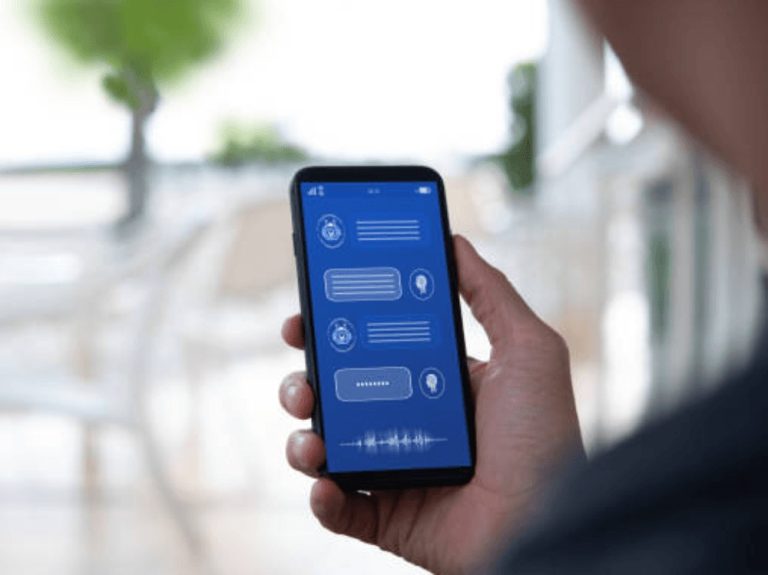
Is it worthwhile to have AI chatbots on the websites of small businesses?
What AI chatbots have done is to move from being a curious feature on the websites of large companies to becoming a common sight on the home pages of small businesses. You’ll have come across the small chat bubble appearing in the corner of a website and asking whether you need some assistance. That’s an AI chatbot carrying out its function, and right now small business owners all have the same question: is it worth introducing one, or is it just another tool that seems promising but ends up causing more trouble than it solves? The article looks at the actual benefits, the actual costs, and the real trade-offs so that you can decide for yourself whether to go ahead with one for your business.
Key Takeaways
- AI chatbots are now occupying an increasing proportion of the websites of small businesses, and their adoption is speeding up rapidly.
- Customer support costs can be reduced by as much as 30% and up to 80% of routine inquiries can be dealt with without the need for a human.
- The main advantage is speed; most of the bots give a response in less than ten seconds, whether it’s during the day or at night.
- AI chatbots do not constitute free labor since time—sometimes even money—is required for setting them up, training them, and keeping them under supervision.
- Those companies which achieve the most successful outcomes limit the bot’s responsibilities and have a human ready as a backup.
- AI chatbots usually pay for themselves within a few months for most small businesses that are asked the same questions over and over again.
What Exactly are AI Chatbots?
AI chatbots are software designed to carry on conversations with the people who visit your website. Unlike the earlier rule-based bots which were limited to sticking to prearranged menus, modern AI chatbots make use of natural language processing. As a result, they are able to read what the visitor types and then respond in a manner that is logical and makes sense. They can provide information regarding your opening hours, your prices, your return policy, or your range of products, all without the need to wake up a human employee.
Certain AI chatbots are connected to the tools you already use, such as your calendar, your inventory system, or your CRM. This enables them to book appointments, check stock levels, or immediately look up an order status. With others, the approach is more basic: they just answer frequently asked questions and provide contact information when a query becomes too complex. In both cases, the aim is the same—giving visitors an immediate answer rather than sending them a message such as “we’ll get back to you” which might remain unread for a day.
Why Small Businesses Are Adding AI Chatbots Right Now
Small business owners are constantly being told to automate the boring tasks in order to save time. This advice is not just empty rhetoric since recent studies have found that a large proportion of small companies currently make use of some kind of generative AI chatbot, the figure continuing to rise each quarter. Marketing and customer service are still the two areas in which small teams adopt AI most quickly, simply because these are the kinds of jobs that accumulate when a small workforce is unable to keep up with demand.
There is also a competitive aspect involved which is easy to overlook. Companies that already make extensive use of AI think that their competitors are doing the same, whereas those which have not yet adopted AI tend to underestimate how far behind they might be. This difference is important since customer expectations have also changed. Nowadays people expect a immediate reply, even from a shop with only five employees, and an AI chatbot is usually the only practical way of meeting that expectation without employing another employee.
The Numbers Behind AI Chatbots on Small Business Sites
Numbers are a better way of telling the story than opinions are, so the following is a brief overview of the current situation. The figures are based on a combination of industry research and surveys of small businesses published in 2025 and 2026, and they show a fairly consistent picture of rapid and practical adoption.
| Small businesses using generative AI chatbots | Roughly 4 in 10, ranging widely by state and industry |
| Small businesses planning chatbot adoption by end of 2026 | About 64%, up sharply from 2024 |
| Routine customer questions a chatbot can answer without staff | Up to 80% |
| Typical reduction in customer support costs | Up to 30% |
| Average chatbot response time | Around one second, versus hours for email |
| Small businesses reporting AI use boosted revenue | Roughly 9 in 10 |
| Cost per chatbot-handled query vs. a human agent | Well under $1, compared to $5 to $10+ for a live agent |
| Consumers who don’t care if help comes from a bot or a person | About 4 in 10 |
The statistic just mentioned is worth looking at again. A considerable number of customers are perfectly willing to speak to a robot provided that it manages to solve their problem quickly. It is this one fact which accounts for much of the rapid adoption of AI chatbots among small businesses that are unable to staff a 24-hour support line.
The Real Benefits of AI Chatbots
Small business owners who have introduced a chatbot usually report the same range of advantages. The following is a structured summary of the benefits most frequently mentioned in both research and real-world case studies.
- We are available at all times of the day. Since a chatbot never stops working, people can get answers at 2 a.m. just as easily as at 2 p.m.
- Response times are faster. While most AI chatbots respond within a few seconds, email can take hours or days.
- We can reduce our support costs by automating routine inquiries, which not only frees up staff time but also considerably cuts the support budget.
- We can improve our ability to capture leads by having a bot gather a person’s name, email address, and question before the visitor leaves the page.
- The answers are always the same. Since bots never have bad days, their responses regarding pricing and policy remain accurate each time.
- The system can handle increases in traffic. During a holiday sale or because of a viral post a chatbot won’t be overwhelmed as a two-person team would be.
- Data that is useful in practice. By looking at chat logs you can see precisely the questions that customers are asking, enabling you to correct confusing pages or address missing information.
It is for this reason that AI chatbots continue to appear on the wish lists of small businesses. Yet the benefits only become evident when the bot is given a well-defined and realistic role. If a chatbot is placed on a website without any plan it tends to underperform, which leads us to the other side of this issue.
The Downsides Nobody Talks About
AI chatbots are no magic, and if you pretend they are you’ll leave business owners disappointed. Even if the pricing seems cheap, it takes up time to set the chatbot up properly. You have to compose the responses, link the appropriate data sources, and test the bot before it comes across a real customer. If you omit that step, the result will be a bot that provides either general or incorrect answers, causing visitors more frustration than there would be without a chatbot at all.
Secondly, AI chatbots have difficulty dealing with anything that falls outside of what they have been trained on. For example, a chatbot designed to handle frequently asked questions will perform very poorly when faced with a complicated billing dispute or an emotional complaint. This is indeed a serious issue since a poor chatbot experience can drive an angry customer away more quickly than a slow email could have done. Moreover, some users just don’t like bots and prefer to speak to a real person right away. If your chatbot doesn’t provide a simple way to transfer the conversation to a human agent, you run the risk of losing those customers completely. Lastly, continuous maintenance is more important than most people realise. Since products, prices and policies all change over time, someone has to keep updating the bot’s knowledge base or it will begin to give out of date answers.
What Is the Actual Cost of AI Chatbots?
The prices for AI chatbots differ greatly, and this wide range tends to confuse many small business owners. Basic chatbot plugins for sites such as WordPress can either be offered for free or cost only a few dollars a month, although these generally provide only limited AI features. Mid-tier AI chatbot services—those that actually use large language models to have natural conversations—usually cost between $20 and $500 a month, the amount depending on the volume of chat and the features chosen. Custom AI chatbots that are directly integrated into your booking system or inventory system cost more initially and might require a developer.
Even so, the discussion about costs should not be limited to the subscription fee. You must also take into account the time it will take to produce good responses, to train the bot on your products, and to keep an eye on its performance in the first few months. A great many businesses fail to appreciate this hidden labour cost and are therefore surprised when the “cheap” chatbot requires more attention than they had anticipated. Nevertheless, when compared to hiring additional support staff, AI chatbots are usually much cheaper on a per-interaction basis, particularly after the bot is handling a steady amount of repetitive questions.
Does it really increase sales for AI chatbots?
The question that every small business owner really wants to know the answer to is this: in short, yes, frequently, but not automatically. AI chatbots boost sales primarily by lowering friction. If a customer has a quick query regarding size, shipping, or availability, they might leave the page if they don’t receive an answer promptly. A chatbot that responds immediately helps keep that customer progressing towards the point of purchase rather than causing them to go to a competitor’s website.
Chatbots can also be of assistance with lead qualification, particularly in the case of businesses that provide services. Rather than using a standard contact form, the bot can pose a number of intelligent questions and send genuine enquiries directly to your inbox, at the same time sorting out the ones that are just casual. Ecommerce businesses typically find that chatbots help reduce the number of abandoned carts, since the bot is able to encourage a customer who is on the fence by offering a discount code or give a reply to a last-minute question. That said, a chatbot cannot overcome a website that has confusing navigation or unclear pricing. It should be seen as a kind of boost for a website that is already converting reasonably well, not as a solution to more fundamental problems.
A human compared with AI chatbots in a live chat situation
There is a tendency to see this as a competition, but a more useful analogy is to consider them as teammates. AI chatbots clearly come out on top in terms of speed, availability, and the cost per interaction. A bot is able to handle dozens of conversations simultaneously, a feat which no human agent could ever achieve. On the other hand, humans are superior when it comes to nuance, empathy, and making judgments that a script is unable to replicate.
Businesses that achieve the best outcomes generally combine the two approaches. The chatbot takes care of the initial questions, those simple ones which take up a lot of staff time yet require little thought. If the conversation becomes complicated or the customer clearly wants to speak to a person, then the bot transfers the conversation smoothly. The way this transfer is carried out is more important than almost anything else in the entire situation. A chatbot that leaves frustrated customers in an endless loop actually does real harm to your brand, whereas one that escalates in a graceful manner builds trust rather than losing it.
Which Industries Get the Most From AI Chatbots
It is important to admit from the start that AI chatbots do not provide assistance to all businesses in the same way. Online shops tend to experience the most obvious and rapid benefits, as customers continually ask straightforward questions regarding size, shipping, and returns. Service businesses such as salons, clinics, and repair shops also derive significant advantages, primarily because AI chatbots can take care of booking appointments without tying up a receptionist’s phone line. Real estate agents make use of chatbots to qualify leads before a viewing is arranged, thereby avoiding hours of discussion about simple property details.
Many restaurants and hospitality companies use AI chatbots to answer questions about reservations, operating hours, and the menu, thereby allowing their staff to concentrate on customers who are already present in the premises. Professional services such as law firms and accounting practices are more careful in their use of these bots, typically restricting them to handling initial inquiries and arranging appointments rather than dealing with any matter that involves legal or financial judgment. Conversely, businesses that deal with highly individualised, one-off transactions—such as those making custom furniture or offering specialised consulting—tend to benefit less, since there are so few questions that are repeated often enough to warrant automation.
In all the cases where success has been achieved, repetition is the key factor. If a business is being asked the same small number of questions over and over again, AI chatbots come into play and save up real time; but where each conversation is different, the usefulness of the bot decreases rapidly. It is more important to know where your business actually stands on that spectrum than to look at any feature list that a chatbot vendor provides.
Signs Your Small Business Is Ready for AI Chatbots
It is not true that every business needs one right away, and that should be stated clearly. The following is a rapid checklist to assess whether you are ready:
- Each week your team is asked the same five to ten questions again and again.
- People often contact you outside of business hours and expect a quick reply.
- The number of messages in your support inbox or in your direct messages grows faster than the staff are able to reply.
- You are losing possible sales since people leave before receiving a quick answer.
- There is clear and steady information concerning prices, operating hours, and the policies, something that a bot could reproduce reliably.
- You are willing to take a few hours each month to keep the bot’s answers up to date.
If most of these seem familiar, then an AI chatbot will probably be worth the cost. In the case where your business receives very little web traffic or when your questions are highly individual and specific to each situation, the benefits will decrease considerably.
How to Choose the Right AI Chatbot
It is just as important to choose the right tool as it is to decide to include one. Take these steps so as not to spend weeks carrying out research.
- Start with the questions that your customers ask most often and select the ten that your team answers the most, since this list determines what the bot actually needs to do.
- Choose the tool that corresponds to your platform and search for chatbot plugins that have been specifically designed for WordPress, Shopify, or the other platform that hosts your site.
- Look at the integration options and make sure the bot is connected to your calendar, CRM, or inventory system if those processes are important to your business.
- Try the free trial using real questions; present the demo with some tricky and oddly worded questions to see how it deals with confusion.
- Look at the way the handoff process works and ensure that the bot can easily escalate to a human agent, preferably by using email, live chat, or a phone number.
- It’s best to compare the prices with the expected volume; for sites with high traffic a fixed monthly charge is more appropriate, while a pay-per-conversation arrangement might be better for smaller sites.
- Begin with a narrow scope; launch the bot to handle only the FAQs at first and then increase its duties once you have confidence in its accuracy.
By following this advice you won’t choose a flashy tool that doesn’t really solve your problem; instead you’ll end up with a chatbot that is designed around the actual questions your customers ask.
Common Mistakes That Kill Chatbot ROI
A chatbot which has been carefully selected can still fail if it is improperly configured. The most typical error is scope creep, that is, a company attempting to get the bot to deal with every possible issue rather than limiting it to a specific number of questions. When a bot is asked to perform too many tasks it provides general answers, and general answers quickly damage trust. Another common mistake is to entirely omit the testing stage and instead release the bot into use without first checking how it deals with unusual phrasing or questions that have several parts.
After the initial setup is completed, businesses often neglect maintenance. Even though prices change, seasonal promotions appear and disappear, and the policies are altered, the chatbot still gives out outdated information for months on end. This quickly damages customer trust, particularly when the bot confidently asserts something that is no longer accurate. Moreover, some companies place the option to speak to a human agent too far down the chat process. If a frustrated customer cannot find a way to get out of the bot interaction, they usually just go elsewhere, and that single negative experience can be more damaging than all the smoothly conducted automated exchanges over the previous months.
The Verdict: Are AI Chatbots Worth It?
AI chatbots are a worthwhile investment for the majority of small businesses which have to deal with repetitive customer queries. The cost savings, quicker response times, and the advantages of capturing leads generally more than make up for the work involved in setting them up within a few months, particularly when a business has consistent web traffic. On the other hand, AI chatbots are not a solution that works in all cases; a business that has low traffic, has highly custom service requirements, or doesn’t have the time to keep the accuracy of the bot up may find the benefits to be disappointing.
The best course of action is to regard AI chatbots as just one element of a wider customer service strategy rather than seeing them as a replacement for it. Begin on a small scale, concentrate on answering your most frequently asked questions, and make sure that customers can easily access a human agent when dealing with anything complicated. Once you’ve done that, the AI chatbot will cease to be something of a risk and will instead become a steady, reliable feature on your website that continues to operate even after your team has signed off for the night.
Frequently Asked Questions
Will AI chatbots be of use to very small businesses which have only one or two employees? Yes, and they usually provide the greatest benefit to individual operators. A chatbot is able to answer simple questions at all times, enabling a one-person business to appear responsive without having to hire additional personnel.
How long does it take to set up an AI chatbot on a website? With the use of a plugin and pre-made templates a simple installation can be carried out in a few hours. However, if the bot is more customised and is connected to booking or inventory systems it will take a few weeks to configure and test properly.
Will an AI chatbot replace my customer service team? Not for most small businesses. AI chatbots handle repetitive, simple questions well, but complex or emotional issues still need a human touch and better judgment.
Can AI chatbots hurt customer experience? Yes, if they’re poorly scoped or hard to escape. A bot that gives wrong answers or traps visitors in a loop can frustrate customers more than having no chatbot at all.
Are AI chatbots worth it for a website with low traffic? Probably not yet. The return on investment depends on volume, so a site with very few visitors may not see enough conversations to justify the setup and maintenance time.
Do AI chatbots need constant updating? They need occasional attention, not constant babysitting. Plan on checking the bot’s answers monthly, and update it whenever prices, hours, or policies change.